The UI of the future is a conversation. Is your tech ready for it?
This time last year, I was on stage at Money 20/20 making a prediction that felt a little contrarian at the time.
Someone asked a question about interoperability in healthcare, wondering if all these systems will actually talk to each other one day.
My answer was that we're never going to get there, because HIPAA and the realities of protecting health data will always put limits on how freely information is shared between organizations.
But I added that doesn't mean the experience has to stay broken. We'll have AI agents do things on your behalf, working inside the rules, so the friction goes away for the individual even when the complexity underneath doesn't.
A year later, I've been spending time with Muse. Now, it's hard not to feel like what I described is showing up even faster than I predicted.
What changes when the interface disappears
Muse is one of a few agents pushing in this direction. OpenAI's Operator, Anthropic's Computer Use, Perplexity's assistant, and others are all chasing the same idea from different angles. I've been spending my time with Muse, so that's what I'll talk about here, but the shift is bigger than any one product.
These tools break the pattern we've all come to expect from software. There's no dashboard to learn and no menu to hunt through. You say what you want, and an agent goes and does it.
Why would I visit a hotel's site, compare rooms across five tabs, and fill out a booking form, when I can just tell an agent what I want and let it handle the rest? Same with comparison shopping and all the little chores we've trained ourselves to do inside someone else's interface. A lot of the sites and apps we think of as destinations may quietly turn into plumbing that the agent works with behind the scenes, plumbing that the user never sees.
For example, I used Muse to hunt down a rare vintage guitar I'd been after for years, tracking it across listings and sellers I never would have found on my own, and I never touched a website. This is what it's supposed to feel like, and it's genuinely great to see it working in the wild. Our event planner even used Muse to secure tickets for our group to tour the Washington Monument as part of an upcoming corporate event.
The moment it really clicked for me happened at home, watching my young kids use Muse. I was testing it, and my children started talking to it. There was no learning curve for them at all. They didn't feel like they were "using software." They just talked, the way they'd talk to a person, and it worked. To them, that was completely natural, because a conversation is the most natural interface there is. They didn't have to adjust to the technology because it finally worked the way they already think.
When a third grader and a CEO can pick up the same tool and use it right away, with no instructions, that tells you a lot about where the whole industry is headed.
Where the conversation breaks down
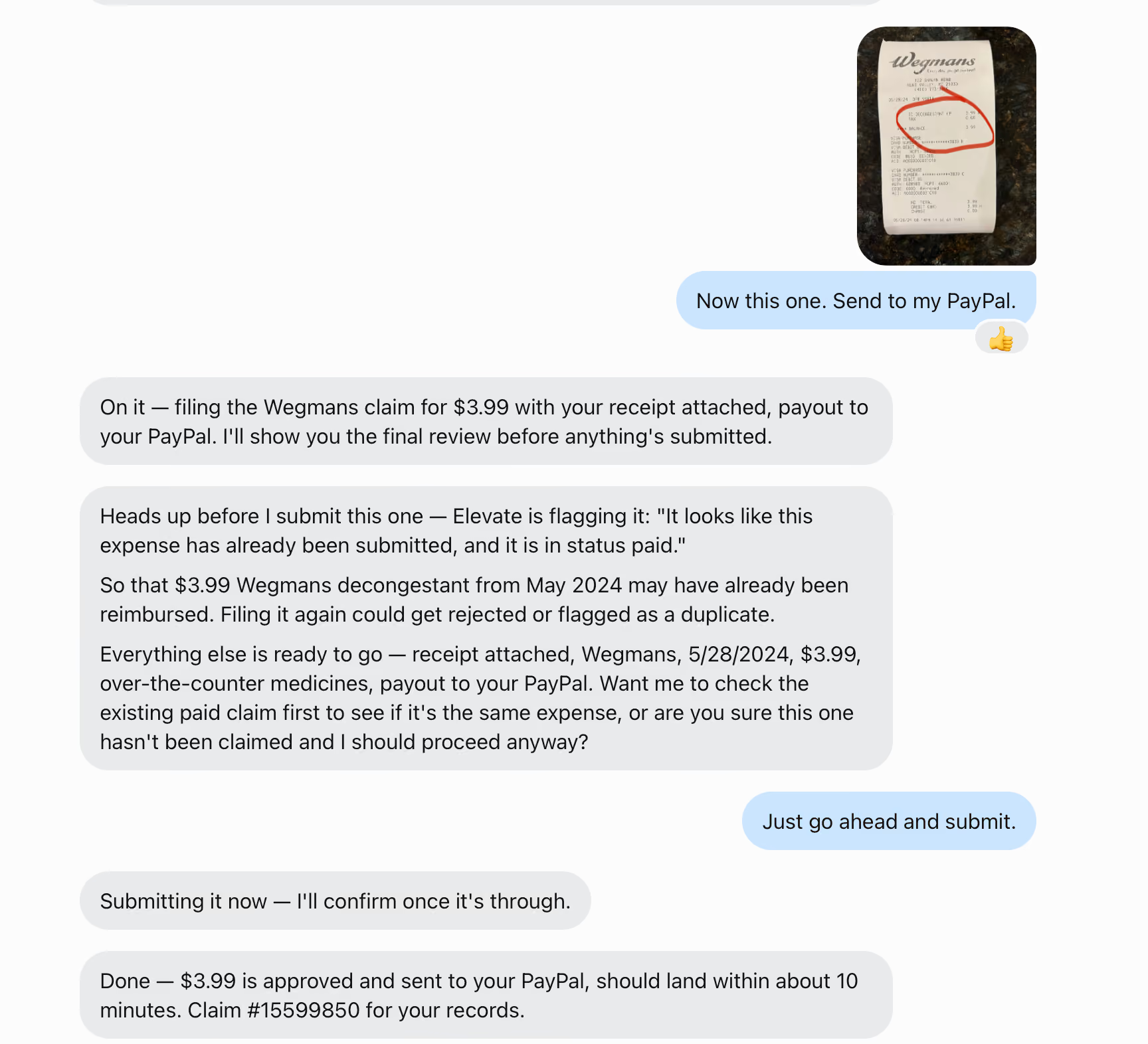
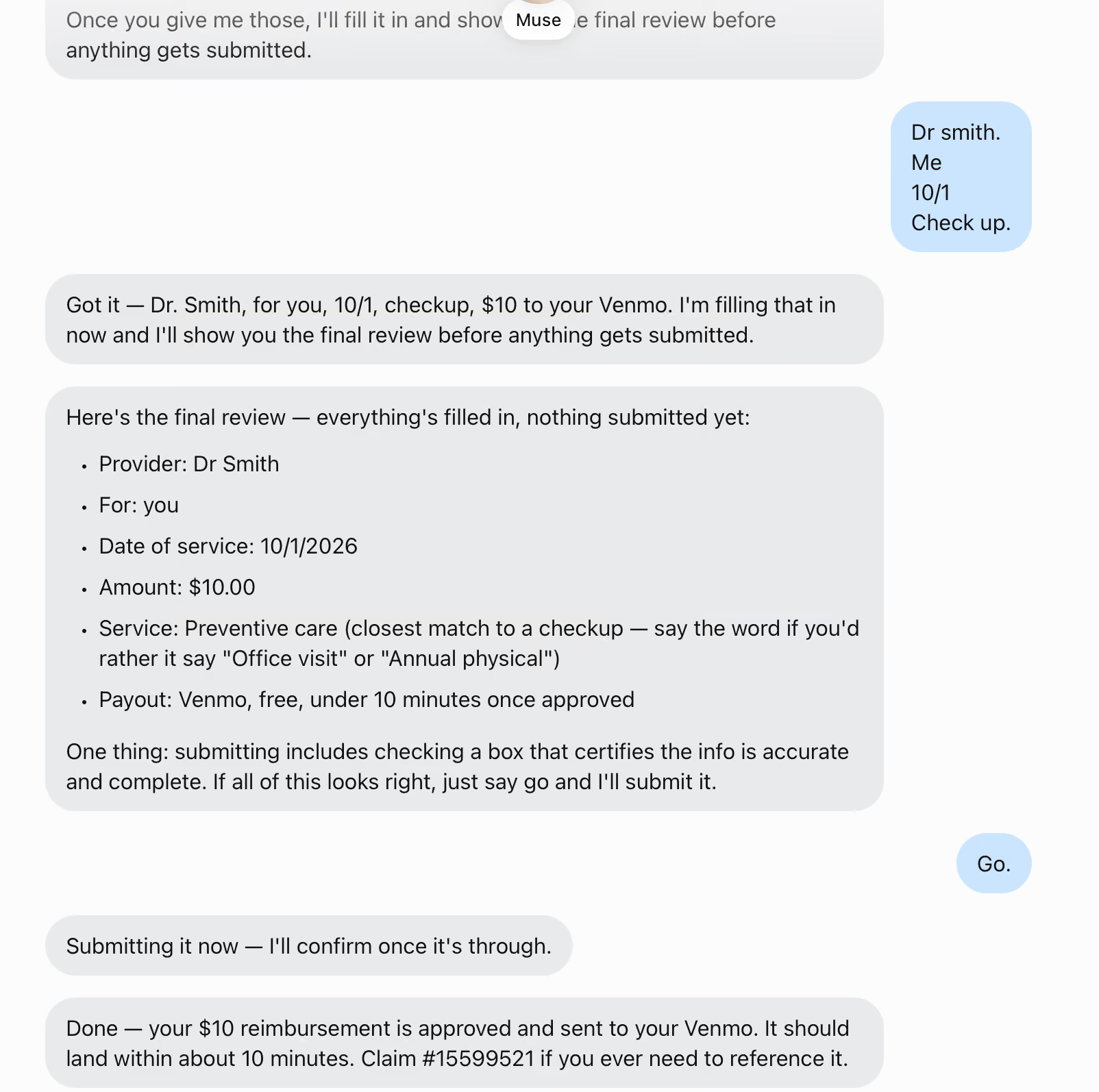
It's not all seamless yet, though. Let's look at use in our space. People are already using it for benefit accounts. Here's a post about using it to file a dependent care FSA claim.
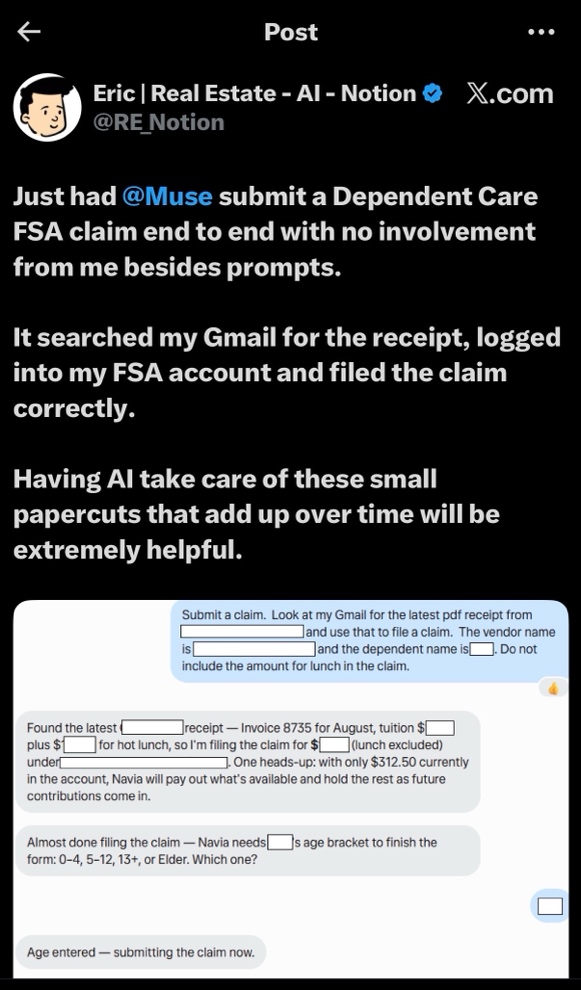
But look closely at what actually happened there. The agent searched his email for the receipt, logged into the FSA account, and filed the claim. That's real, and it's impressive. What it couldn't do was get an answer back. There was no instant confirmation from the administrator, no real-time "here's what we owe you" or "this one's approved." The agent did the whole submission side of the job and then hit a wall, because the other party wasn't set up to respond in kind. The paperwork went in, but the conversation stopped there. That's the missing half.
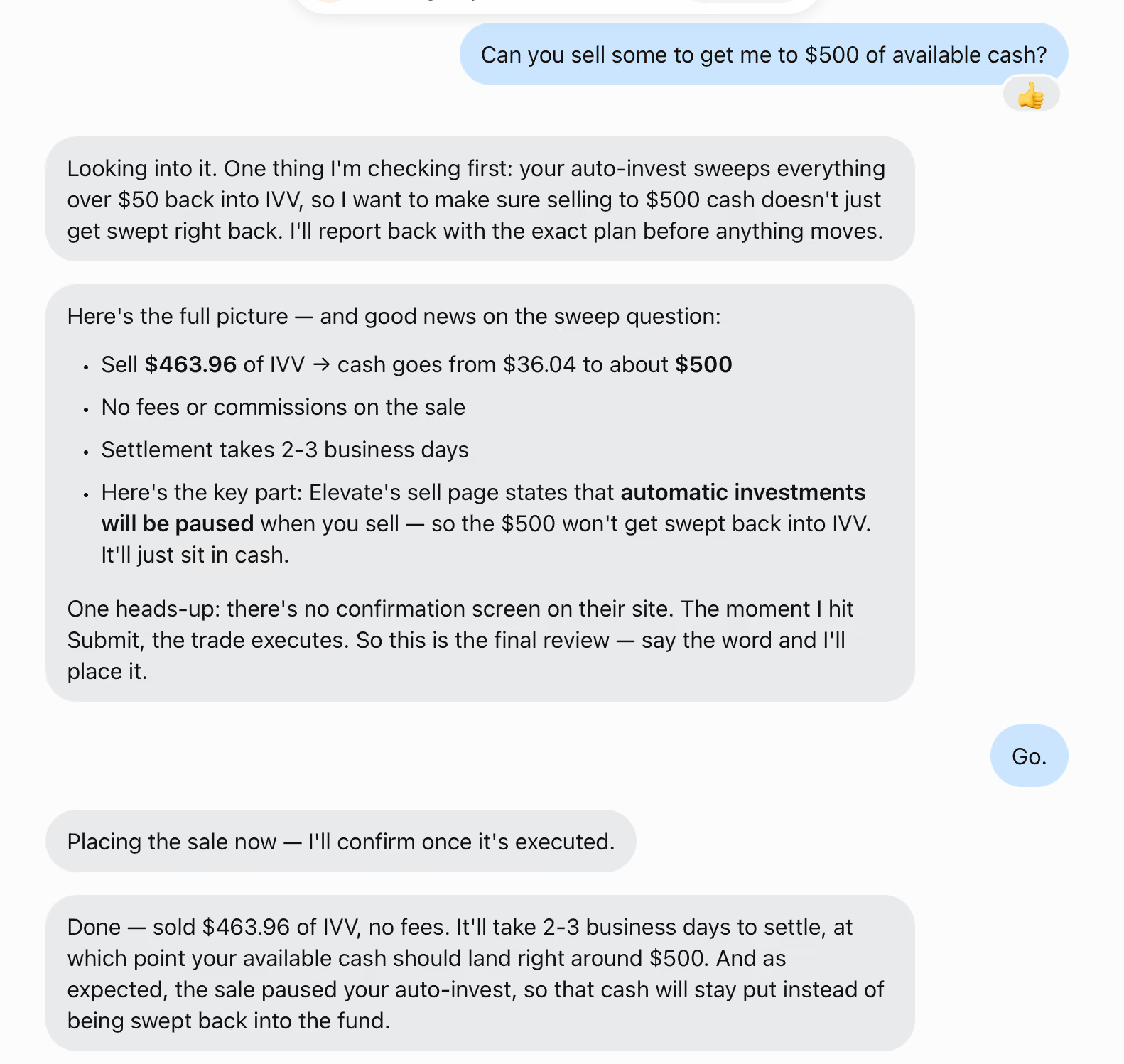
We put this to the test ourselves. My co-founder and CTO ran Muse against our own platform, and it worked great. It submitted claims and executed trades, no hand-holding required. Then he asked it to maximize his contributions for the year and to check his numbers against another provider, since he also contributes to an account there. Ours handled it in one conversation. The other one came up empty, partly because it was down right then, but that's not really the point. Even on a good day, a batch system can only take the request and run it on its own schedule, so the agent would have to keep circling back over the next few days to see whether each step cleared.
Because everything in our platform is a discrete piece of work, Muse got a meaningful answer immediately and finished the job in a single exchange. Same tool, same request, two very different experiences, and the difference came down to whether the system on the other end was built to hold a real-time conversation or just take a message and process it later.
{{blog-grid-1}}
The part people underestimate
It's easy to look at a smooth conversational experience and assume the magic is all in the AI model, but that's not it. An agent can only book that table, move that data, or finish a job if there's an architecture underneath that lets it work. But, it also has to be secure, reliable, and built to work inside the rules.
This is exactly the point I was making about healthcare a year ago. The experience looks effortless on the surface, but it runs on real infrastructure: clean APIs, thoughtful data access, permissioning, auditability, systems designed to be acted on by an agent instead of clicked through by a human. The simple conversation only works because of the complicated plumbing behind it.
And underneath all of that is a divide most people never think about: batch versus workflow. A lot of older systems are batch-oriented, because that's how software was built back then. Work piles up in a queue and gets run on a schedule, often once a day. Conversely, workflow systems were built deliberately to do better. Each event is handled on its own timeline, the moment it arrives.
That difference is everything when an agent is involved. An agent-based experience shouldn't require submitting something and then checking back tomorrow. It wants an answer now, so it can take the next step.
When we were designing our systems, we purposely built workflow-based processes throughout all aspects of our platform. For example, claims processing runs on a workflow engine for exactly this reason: a claim is adjudicated the second it comes in, and when we need more information, the person gets told immediately instead of days later. That's the kind of system that can actually hold a conversation. A batch system can only take a message and go quiet. As agents become the front door to more of what we do, business leaders need to sit back and look at the partners behind their tech solutions today. Are they built to participate in new innovations that are emerging faster and faster?
We have to finish the conversation
Go back to that Dependent Care FSA claim for a second. The agent did its half, but the system on the other end couldn't close the loop in the moment. It's not that a batch system can't respond at all, it's that it responds on its own schedule, a piece at a time, so the agent has to keep coming back over days to see what cleared. The conversation technically continues, but it's stretched across a week instead of settled in one sitting.
This is the part I'd push leaders on hardest. It's one thing to let an agent act on your systems. It's another to build systems that can hold up their end of the exchange and be directive about it. If your infrastructure can only listen, you're only doing half the job, and your customers will feel the gap the moment their agent asks you a question and waits.
How to know if your tech provider is ready
If you're relying on a technology partner to support your product line, this is the moment to poke holes in it. Ask the hard questions before the market forces them:
- Can systems be driven by an agent, and not just a human clicking a screen?
- Is the system workflow-based, working in real time, or is it still batch-oriented? If the answer involves "cutoffs," "overnight," or "a couple of days," an agent is going to hit the same wall that FSA claim did.
- Do you have access to real and well-documented APIs?
- Is your data structured and accessible enough for an agent to act on it, while staying inside compliance boundaries like HIPAA?
- How do you handle permissioning and identity when an agent is acting on someone's behalf? Who's allowed to do what, and can you prove it afterward?
- Is there an audit trail? When an agent takes an action, can you show exactly what happened and why?
- Was AI-readiness designed in from the start, or bolted on afterward?
If your provider can't answer these questions, or give you the right answers to these questions, you're not ready for where this is going, and the weakness will show the moment your customers start expecting the Muse experience everywhere.
Where this leaves us
Muse looks a lot like my year-old prediction is starting to come true. Will it play out exactly the way we think? We'll see. This space moves fast, and I'd be suspicious of anyone who tells you they know exactly how it ends.
But the direction is clear. The interface of the future is a conversation, and a conversation only works if both sides can talk. The companies that do well will be the ones that put in the hard architectural work now, so that when an agent shows up asking questions on a customer's behalf, they can answer.
FAQs