Five Years of AI Claims: What We've Learned From Processing Over 11 Million Claims
In early 2021, our team began building AI into the claims process for HSA, FSA, and HRA payments. We knew we were ahead of the market. In fact, claims administration across much of the industry still relied heavily on manual review, and reimbursements often took days or weeks to complete. We had the time, resources, and talent to rethink the entire process and build it the correct way from the ground up.
Today, 11 million claims and $1 billion in reimbursements later, we are still ahead of the industry, and we’re using AI to help us process claims faster than ever. Here’s how we got here.
The vision, realized
Our vision and the opportunity were clear. If technology could accurately read documentation and assist with routine claim decisions, participants could receive faster reimbursements and claims teams could spend less time on simple tasks.
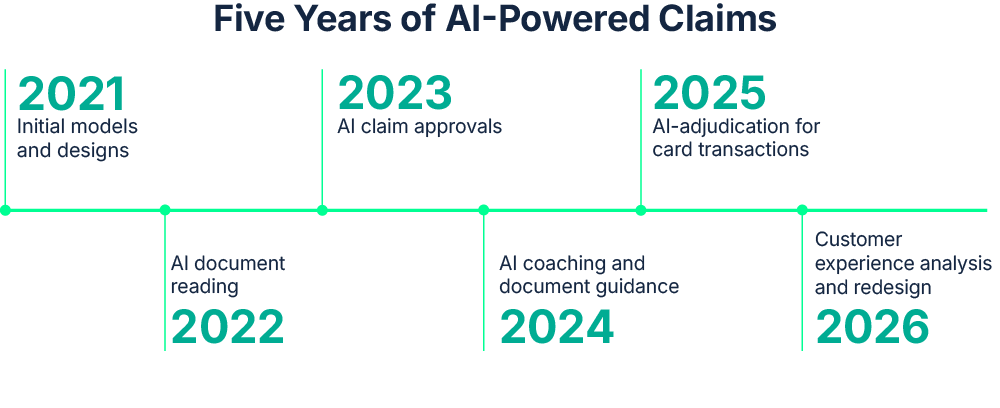
In 2022, that early proof of concept became our first production AI claims capability. Since then, we’ve invested years in strategic planning, customer usability analysis, and product development, while studying millions of participant interactions to understand how people complete reimbursement requests, where delays occur, and how the process can be continuously refined.
Today, we are seeing our platform deliver:
- Up to 78% of claims automatically approved by AI
- 90% reduction in returned claims through automated coaching
- :35 seconds from claim submission to payment
Growth over time
The first generation of our claims automation focused on reading documents. Receipts, invoices, and supporting documentation contain most of the information needed to evaluate a claim, but manually getting that information is time-consuming and repetitive. The first challenge was teaching software to interpret those documents.
Learning moments
Some of the lessons came from unexpected places. Take a Target receipt, for example. Millions of people shop there every day, many of them purchasing eligible healthcare items. But if you look closely at a Target receipt, you'll notice it often shows only the retailer’s famous red logo rather than clearly displaying its printed name. That may be great for brand recognition, but early on, it created challenges for automated document review. Over time, we trained the system to recognize similar patterns and correctly process them.
Working in seconds
Let's look at auto-adjudication next. Instead of just identifying information on a receipt or invoice, we needed to build a system that could evaluate that information against the eligibility requirements and plan rules for each employer's benefit plan. That means every claim must be reviewed against that specific plan, the employer's configuration, and the participant's account status at the time the claim is submitted. All these pieces have to work together perfectly, within seconds, to deliver immediate claim approval.
Solving issues with coaching
We also wanted to solve for the back-and-forth that adds time to the claims process when one piece of information is missing, and the claim is passed from the adjudicator back to the participant.
This normally causes delays and possible confusion. Most claim delays are caused by incomplete documentation, missing information, or assumptions about requirements. To solve this, we built immediate coaching into the submission process, so participants could correct issues before entering a review queue. This feature alone has reduced reworked claims by 90%.
Direct uploads
Along the way, we identified smaller process delays that had nothing to do with AI adjudication. One example was getting paper receipts into the system. Participants often started a claim on their computer while the receipt they needed was on their phone. They had to email the receipt to themselves, which took extra steps and made it more difficult. To get rid of this issue, we introduced QR code uploads that allow participants to directly attach a receipt from their phone to the claim they're completing.
Payments for real people
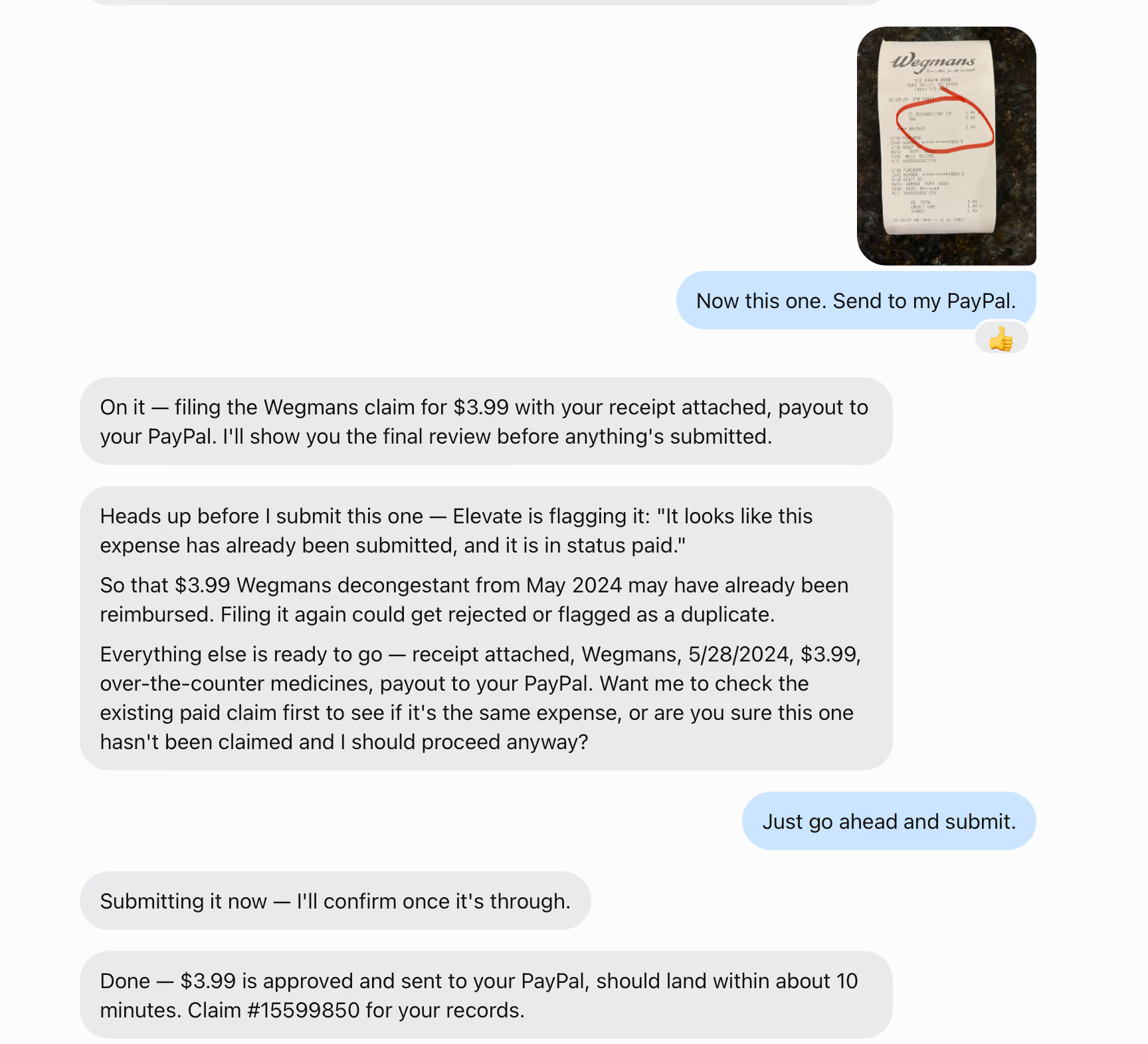
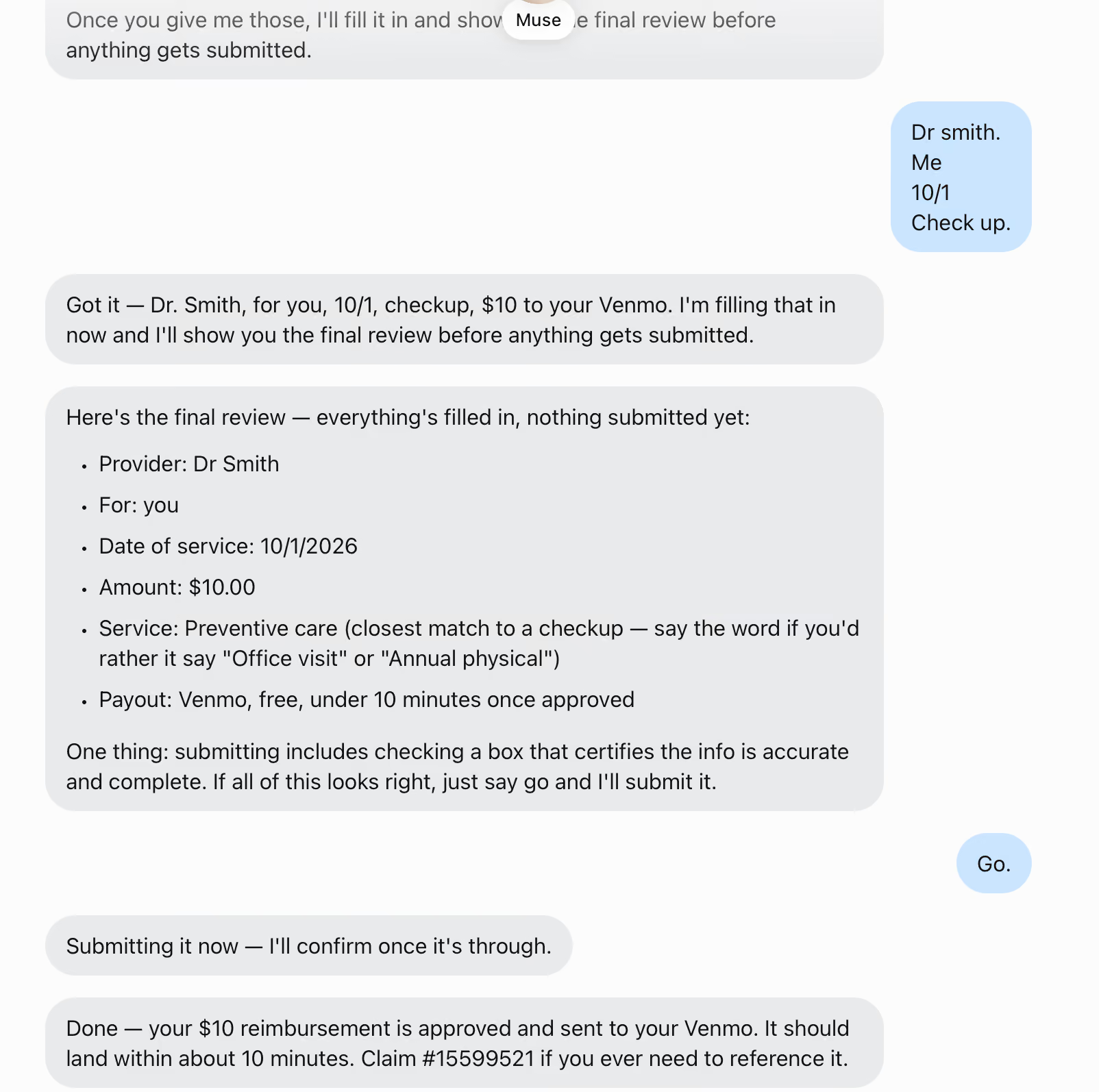
We also incorporated real-time payment options, like PayPal, Venmo, and debit card pushes, so after the claim is approved, the money is also delivered just as fast as the approval itself. Employers have seen up to 85% of their employees' manual claims reimbursed in real-time through Venmo or PayPal.
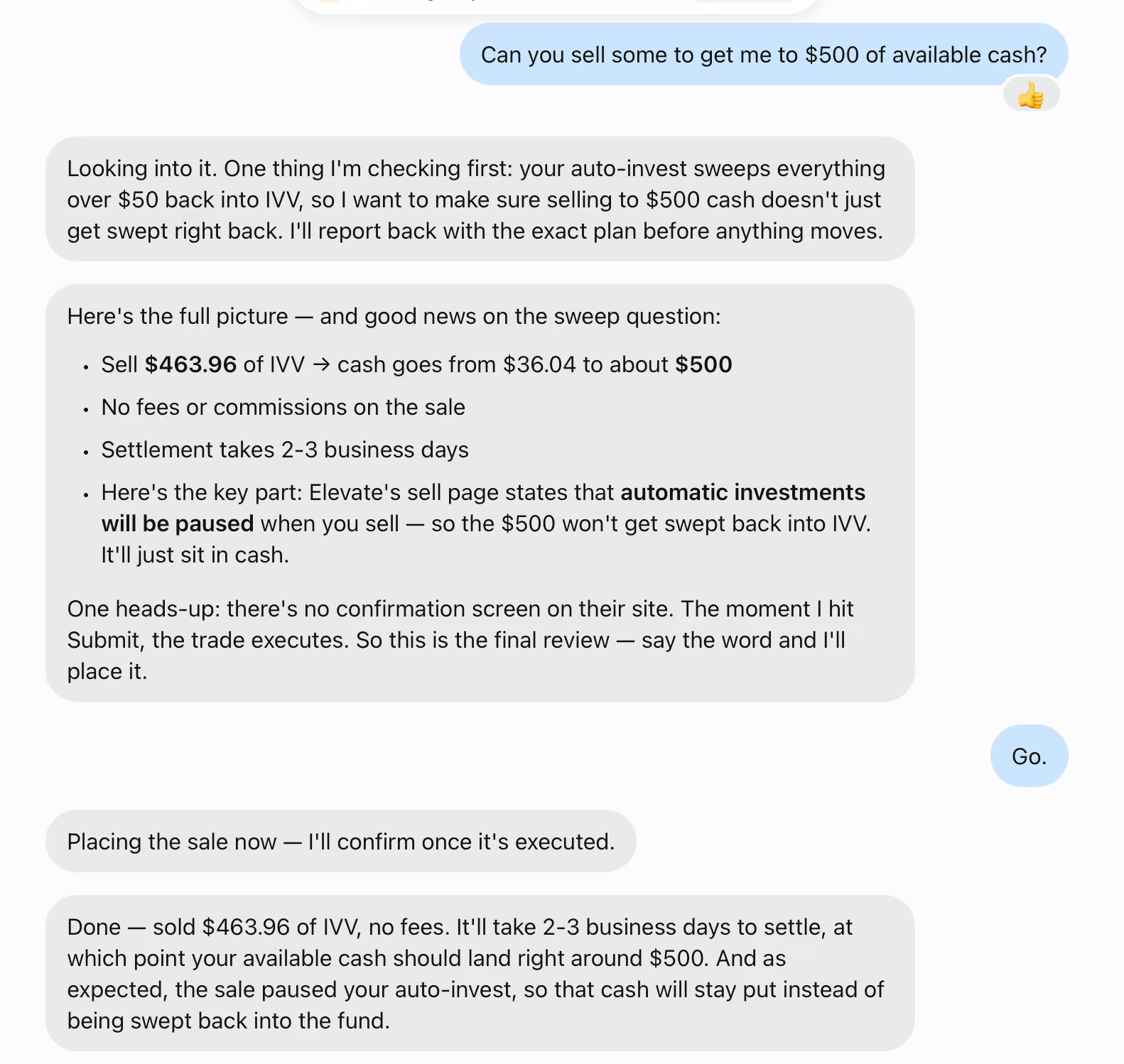
More recently, we’ve extended our AI approval capabilities to card transactions. Documentation uploaded for eligible card purchases can now be reviewed and automatically adjudicated, which reduces processing time and helps administrators manage growing transaction volumes without adding staff.
"One of the advantages of working on AI claims for several years is that each generation builds on the experience of the last. We've had the opportunity to learn from millions of documents, claims, and transactions. Those lessons continue to influence every release."
- Brian Strom, co-founder and CTO of Elevate
Mobile matters
As we built these capabilities, we made sure they were available through both the web platform and our mobile apps. For many participants, the mobile experience is just as important as the desktop experience. The ability to submit a claim while leaving a doctor's office or pharmacy helps people access their funds faster and means their reimbursement is available when they need it most. Today, many employers on the Elevate platform see more than 75% of their employees' manual claims submitted through the mobile app.
The human side
Claims processing is often categorized as an operational challenge, but participants view it very differently.
For someone waiting on reimbursement for a medical procedure, prescription, dependent care expense, or another eligible purchase, the process is personal. Delays are frustrating, especially when we’re talking about real money. Unclear requests for documentation create confusion, and multiple rounds of review can turn a simple reimbursement into a real pain point.
In addition to improving claim accuracy and automation rates, our product and design teams spend considerable time reviewing how people interact with the platform. User behavior data, session analytics, support trends, and customer feedback all help identify areas where participants may be getting stuck.
"We regularly review participant behavior to understand where friction exists in the process. Some improvements involve major functionality. Others are small design changes that remove confusion and help people complete tasks more easily. Both matter."
- Amanda Richter, Head of Product at Elevate
Partner impact
For our partners and their teams of claims administrators, automation reduces the volume of routine work entering review queues.
"Our claims team noticed an amazing improvement right away. As soon as we upload documentation for a card transaction, it's approved automatically. It's saving us a lot of time and letting us focus on the claims that really need attention."
-Lizzie Morris, Claims Manager at Rocky Mountain Reserve
It’s not just the automation that makes an impact. Claims that cannot be automatically approved don't disappear into a queue. They are routed to the appropriate reviewer based on workflows defined by each partner. Reviewers are provided with the tools, information, and context they need to make a determination quickly. Rocky Mountain Reserve reported that their team now processes claims twice as fast using Elevate's platform.
What’s next
The claims process continues to evolve, and there are still opportunities to make it easier for both participants and administrators.
Current development efforts include additional coaching and participant guidance designed to help users understand their documentation requirements before they submit a claim. We’re also investing in better handling of Explanation of Benefits (EOB) documents and improving how the platform manages submissions that have multiple expenses on a single document.
Just as we’ve solved these issues since the beginning, we’ll continue to deliver new ways to solve old problems.
FAQs