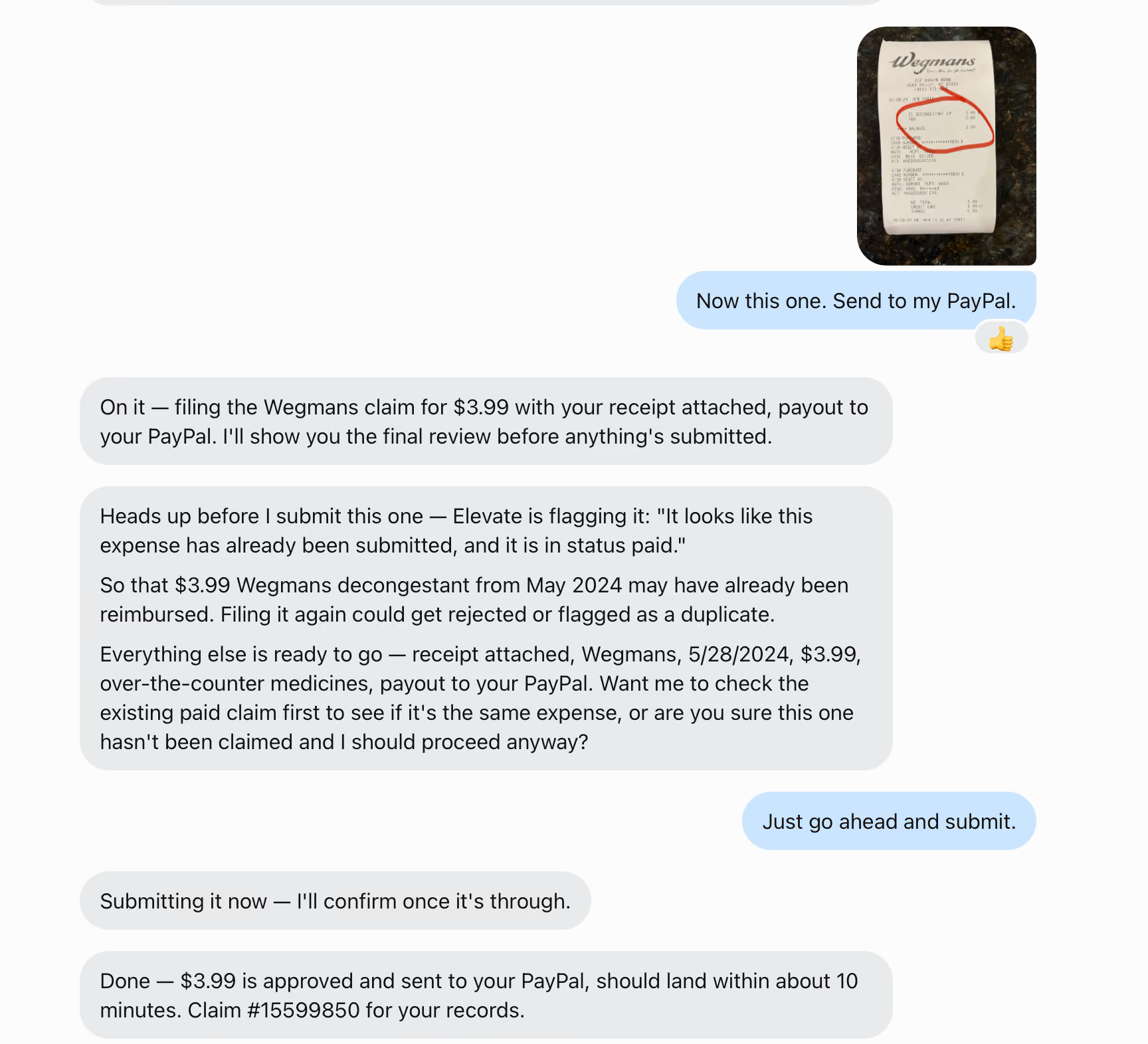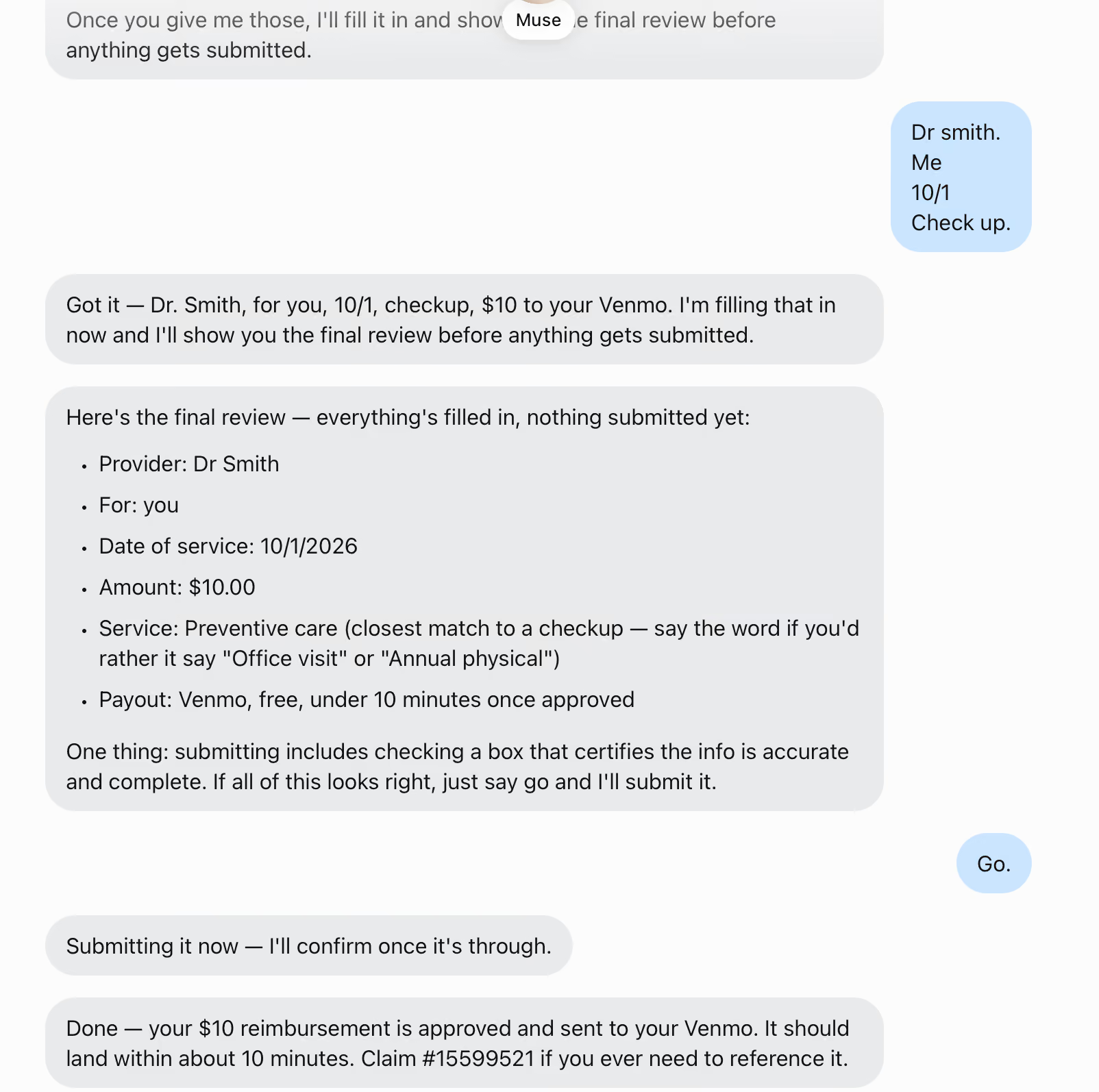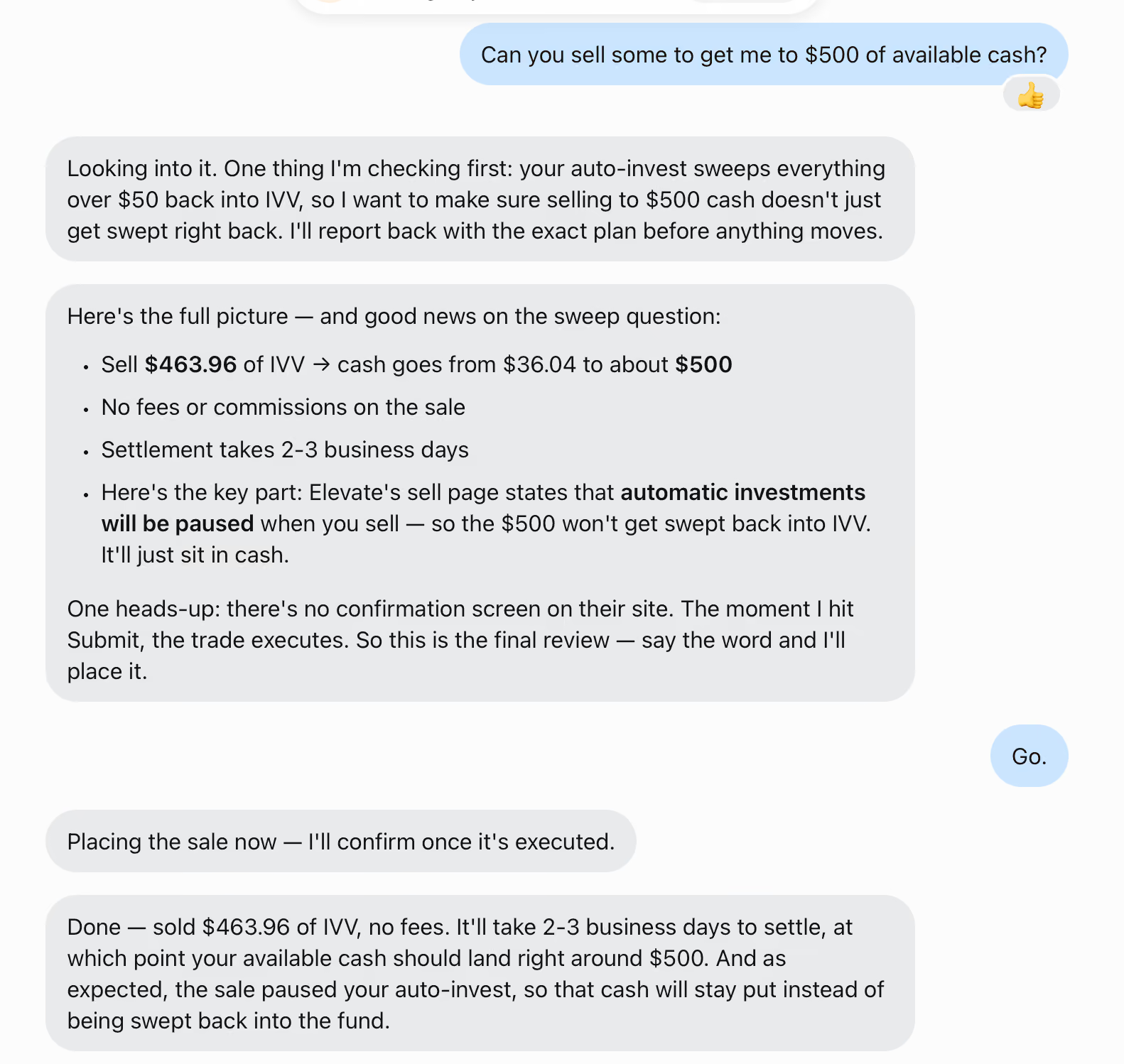
Vibe Coding vs. Enterprise-Grade Architecture: Where the Vibes Break Down
Recently, the AI conversation got a little louder, if that was even possible. Terms like “vibe coding” dominated headlines. Some argued that you can now push a button, spin up a SaaS company, and replace traditional software platforms almost overnight.

And it IS exciting. We are strong believers in AI at Elevate, and we use it extensively. Automation has been one of our founding pillars since we started the company in 2020, well before ChatGPT entered the mainstream. AI has accelerated what we already believed: there is enormous room for automation in our space.
But acceleration isn’t the same as replacement.
Surface-Level Replication vs. Real Systems
I recently saw a demo where someone “vibe coded” a Monday.com-style project management tool in minutes. It looked impressive. But even in the prompt, the instructions were to examine what Monday.com is doing and replicate it.
That distinction matters. Large language models are exceptional at synthesizing patterns they have seen before. They can replicate surface functionality very quickly. However, replication isn't progress.
When I experiment with tools like Gemini or Claude and ask how they would architect a platform like ours, the answers resemble how legacy platforms were originally built. They consistently use the most straightforward and internally logical design. The challenge in our industry is that those designs look correct at first ...and then break down when there’s additional complexity or growth.
That’s not surprising, because models train on what already exists. If you only learn from past implementations, you just recreate the status quo.
In industries like consumer-directed benefits, payroll, or financial infrastructure, the visible interface is only a fraction of the system. The real complexity lives underneath the surface.
The Iceberg Problem
From the outside, our space can look straightforward. You see accounts, contributions, claims, and cards. It seems simple enough. But beneath that surface is a dense level of complexity: custodial HSA structures, a variety of funding models, notional accounting, ever-changing regulations, file variability across partners, compliance dependencies, and audit requirements.
If you don’t design the system with all that complexity accounted for from day one, you are often locked into a structure that can be extremely difficult to unwind later. Unfortunately, that pattern defines much of our industry’s history.
Most legacy systems can’t fix the foundational architecture. Teams don’t lack intelligence or effort - it’s just because they are buried under production volume, accumulated complexity, and previous design decisions. Once you reach scale, refactoring the foundation becomes exponentially harder.
AI can generate code quickly, but architectural foresight requires actual experience.
The 80/20 Illusion
In software, you can build 80 percent of something very quickly. Sometimes you can even reach 99 percent. The remaining fraction is where the real work begins.
That final stretch includes handling edge cases, interpreting regulations, building error handling, scaling under load, creating observability, developing operational tooling, and designing for long-term flexibility - all incredibly important. A prototype may look complete, but real-world variability quickly exposes real gaps.
Today’s models still require experienced engineers to guide, validate, and correct what they produce. Without that oversight, you risk embedding structural flaws early in the foundation that create downstream effects. The “black box” nature of AI-produced code makes this especially important. If you don’t fully understand what the system is doing under the hood, you simply can't create a regulated financial process on top of it.
Domain Expertise Is Not Enough. Build Experience Matters.
Many in our industry are experts in consumer-directed health. Every TPA has experienced people who know the rules, the subtle nuances, and understand the complexities. However, domain knowledge alone doesn’t translate into sound platform architecture.
The real advantage comes from teams who can combine domain expertise with direct experience building these systems from the ground up. When you've built a system before, you remember where you made tradeoffs, what broke down as you scaled, and what mistakes you'd redesign if you could start again. That insight doesn’t live in documentation - it comes from actually doing the work.
AI can assist that kind of team. It can be used to amplify productivity and help automate code generation, testing, monitoring, and workflow design. But, like most situations, the tool is only as effective as the engineer guiding it.
AI as a Force Multiplier, Not a Replacement
At Elevate, we view AI as a leveraging tool. It strengthens our automation, decreases the number of manual touchpoints, and helps us scale without adding operational friction. However, it doesn’t eliminate the need for architectural intent, compliance rigor, infrastructure discipline, or experienced engineers.
If anything, AI raises the bar. Poorly designed systems will be exposed more quickly, while strong foundations will compound more efficiently over time.
Most customers never see the underlying architecture of a benefits platform, and they shouldn’t have to. But that invisible layer determines reliability, scalability, flexibility, regulatory durability, and long-term cost structure.
AI is real, and it’s powerful, but SaaS isn’t disappearing. It’s accelerating - for those ready to build with it.
Get started with Elevate. Connect with us for a demo.
About Brian Strom
Brian Strom is Co-Founder and Chief Technology Officer of Elevate, where he leads the company’s technology vision and platform development. Previously, he co-founded and served as CTO of ConnectYourCare, an industry leader later acquired by Optum. Brian originally wrote the platform’s code more than 20 years ago in his apartment. Today, he applies two decades of experience building benefits infrastructure to the Elevate platform.
Brian holds multiple patents, including innovations in HSA pre-funding and multi-purse account structures. In 2024, Employee Benefit News named him an Outstanding Tech Innovator for his impact on the benefits and human resources industry.
FAQs